Smart B2B ordering in HoReCa: the end of the phone call and the notepad
Why hospitality procurement costs more than it looks when it runs on calls and messaging apps — and how a marketplace with AI suggestions changes the economics for both sides.
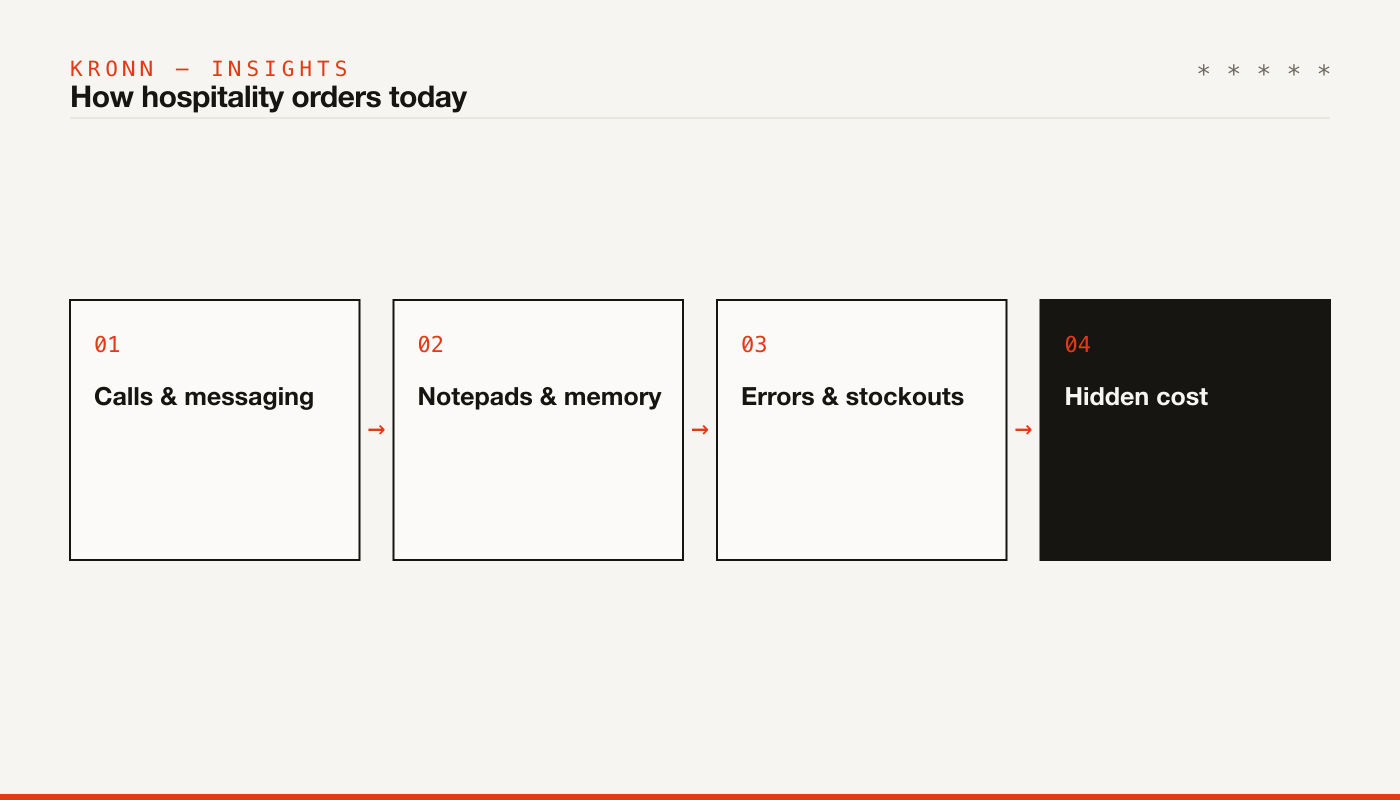
Ask a kitchen manager how they order supplies and you’ll hear the same script almost everywhere: phone calls to three suppliers, a message on a chat app for the fourth, a notepad next to the freezer. Does it work? More or less. Does it cost? More than it looks.
The invisible cost of analog
The obvious cost is time: 30–45 minutes a day on the phone, every day, all year. The less obvious cost is errors — the order written down wrong, the product that arrived different, the stockout discovered on Saturday at noon. And the entirely invisible one: the inability to compare. When every supplier is a phone call, nobody compares prices systematically; you buy out of habit. At the end of the year, that habit is a percentage of your food cost.
On the supplier side the picture is symmetrically broken: sales reps writing orders by hand, price lists sent as PDFs that expire before they’re opened, no digital channel short of building their own store.
What a B2B marketplace does — and what a smart one does
A B2B marketplace solves the basics: one cart across multiple suppliers, per-customer price lists, history, repeat orders. That alone changes the daily routine.
The interesting part starts when the platform embeds AI. Then the system learns each business’s rhythm — what it orders, how often, in what quantities — and starts working proactively:
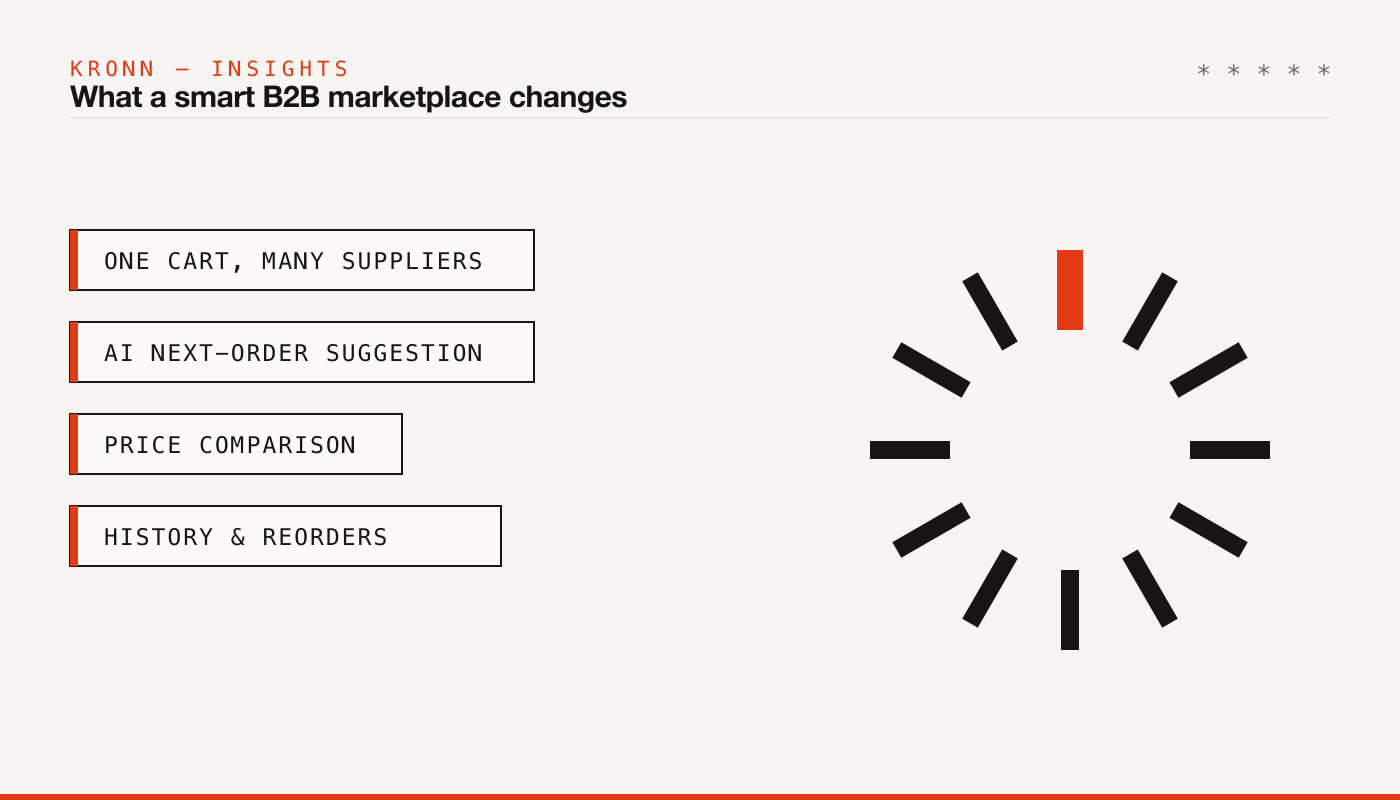
Next-order suggestions. The platform knows the oil runs out every nine days and proposes it before the shelf is empty — ordering becomes confirmation, not composition from scratch.
Smart comparison. When the same product exists in three catalogues, the price deviation is flagged automatically. Not so you switch suppliers weekly — so you negotiate with data.
List → cart in one move. The kitchen’s handwritten list becomes a cart with matched products, correct pack sizes and minimum quantities already checked.
This is the logic we built into Xodroulis: a platform that doesn’t wait for commands, but understands the work and makes it easier. That’s how we picture the sector’s future tooling — and how we build it.
And for suppliers?
The same AI that suggests orders to restaurants gives suppliers something they never had: demand visibility. Which products move, in which regions, with what seasonality. The sales rep stops being an order-taker over the phone and becomes an account advisor — with the platform doing the mechanical work.
If you’re a supplier or a hospitality group and want to see what this would look like in your own operation, drop us a line.